Respiratory Illness
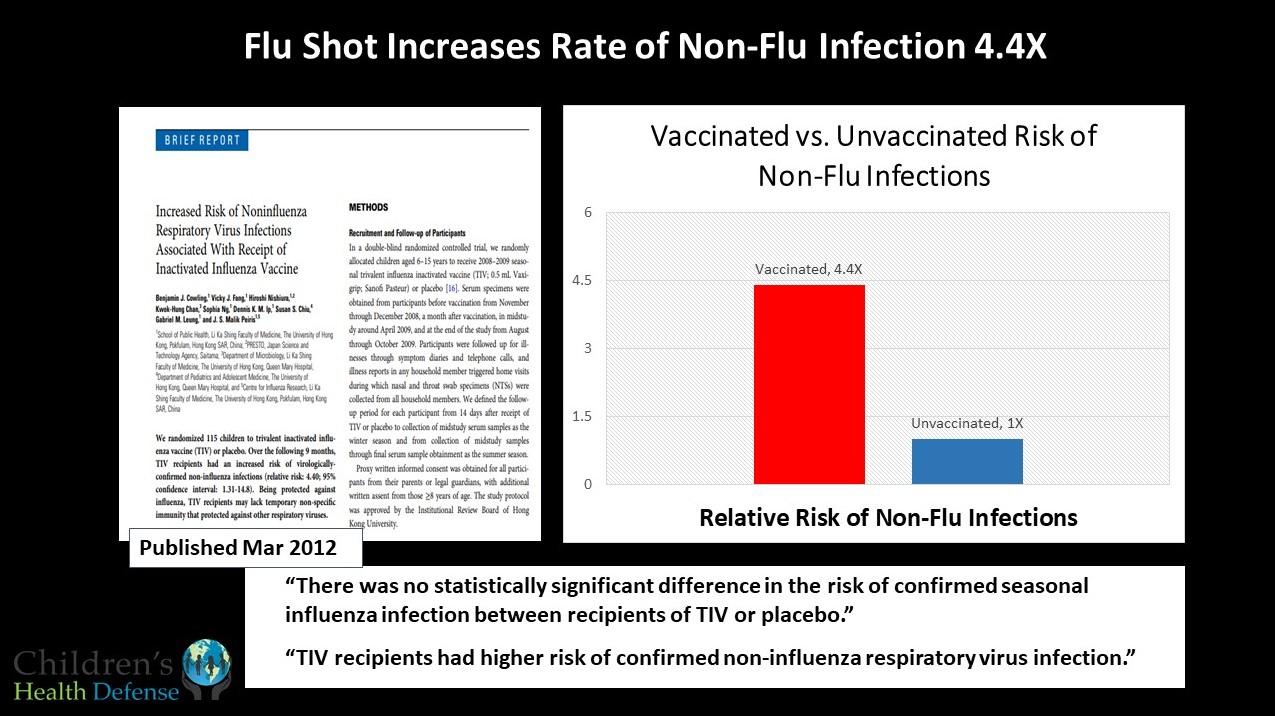
Respiratory infections (not related to influenza) increased after vaccination for influenza, by as much as fourfold.
Persons vaccinated for influenza were found to have a higher rate of other respiratory infections.
| Study Details |
| Increased Risk of Noninfluenza Respiratory Virus Infections Associated With Receipt of Inactivated Influenza Vaccine |
 |
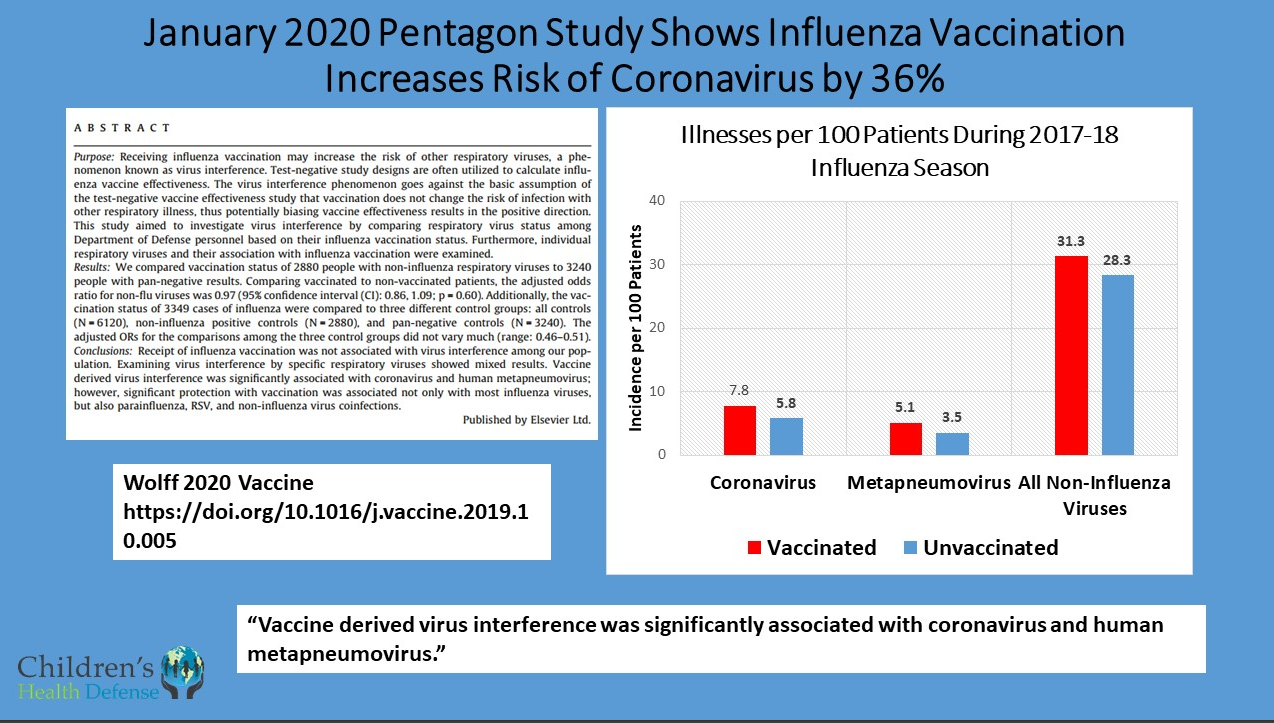
Influenza vaccination increased the risk of Coronavirus and other infections.
| Study Details |
| Influenza vaccination and respiratory virus interference among Department of Defense personnel during the 2017-2018 influenza season |
 |
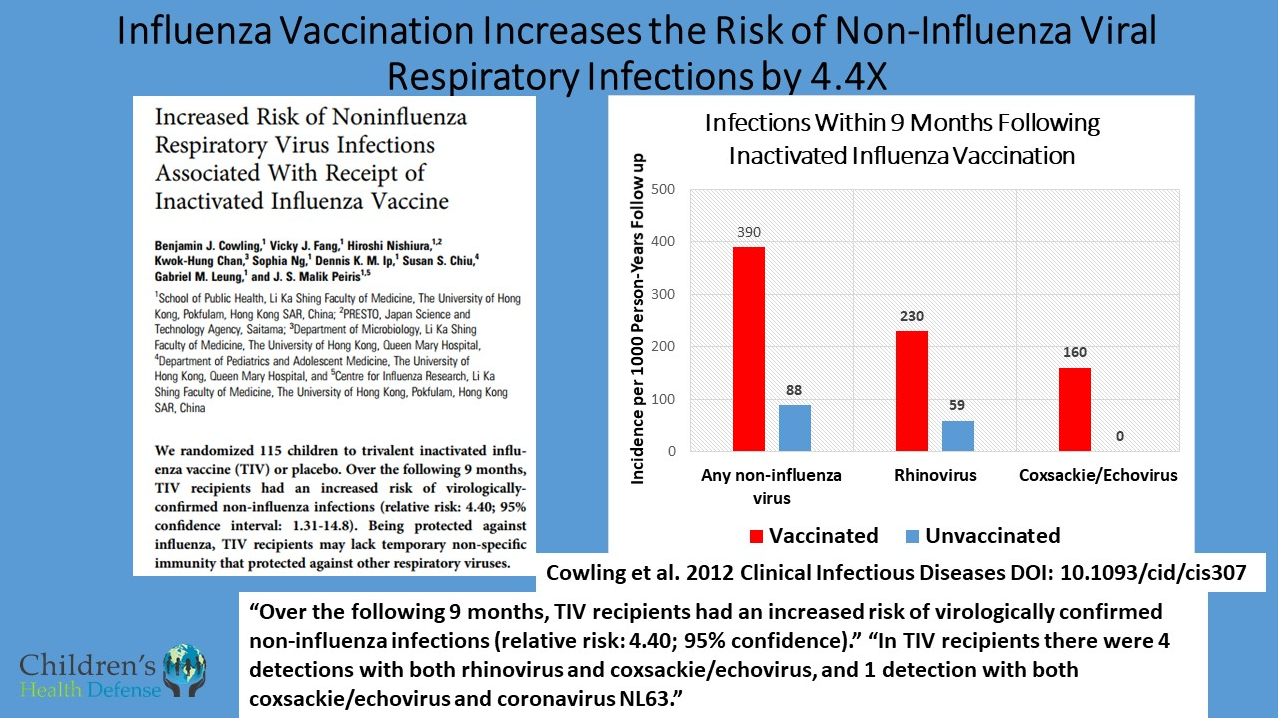
Increases in other respiratory infections following influenza vaccination.
| Study Details |
| Increased Risk of Noninfluenza Respiratory Virus Infections Associated With Receipt of Inactivated Influenza Vaccine |
|
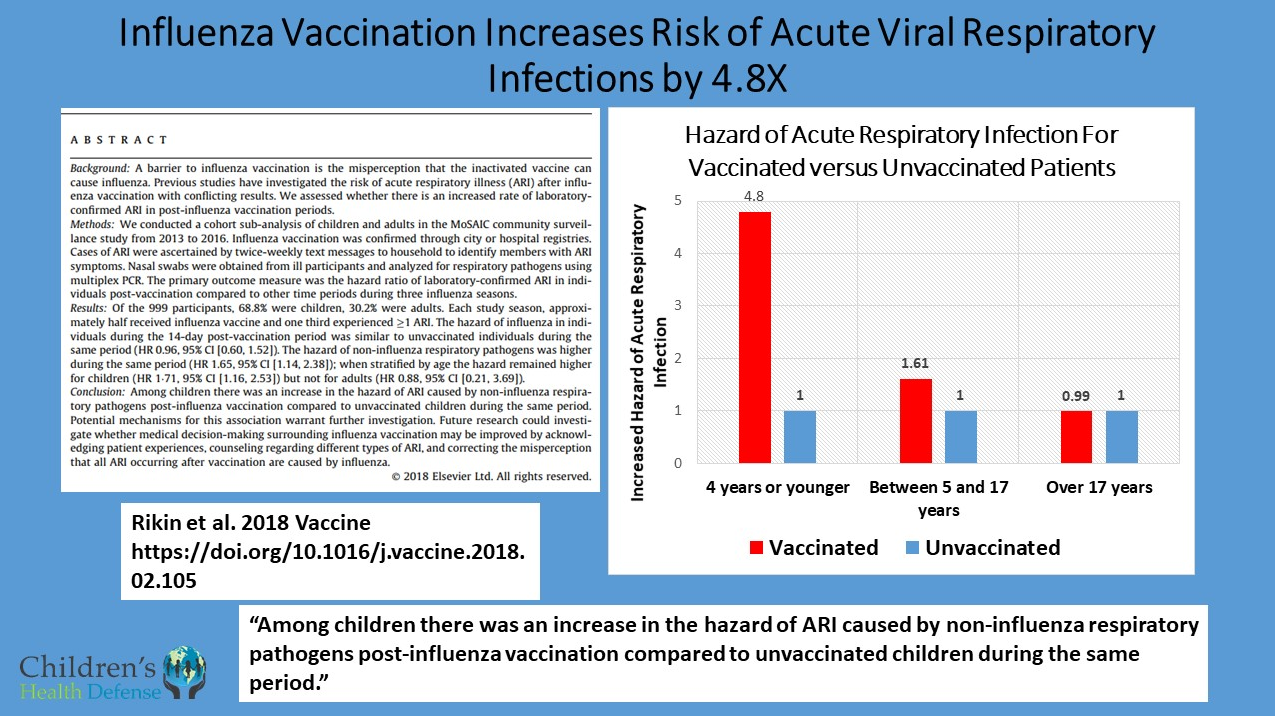
Vaccination increases the risk of acute respiratory infections in young children.
| Study Details |
| Assessment of temporally-related acute respiratory illness following influenza vaccination |
|
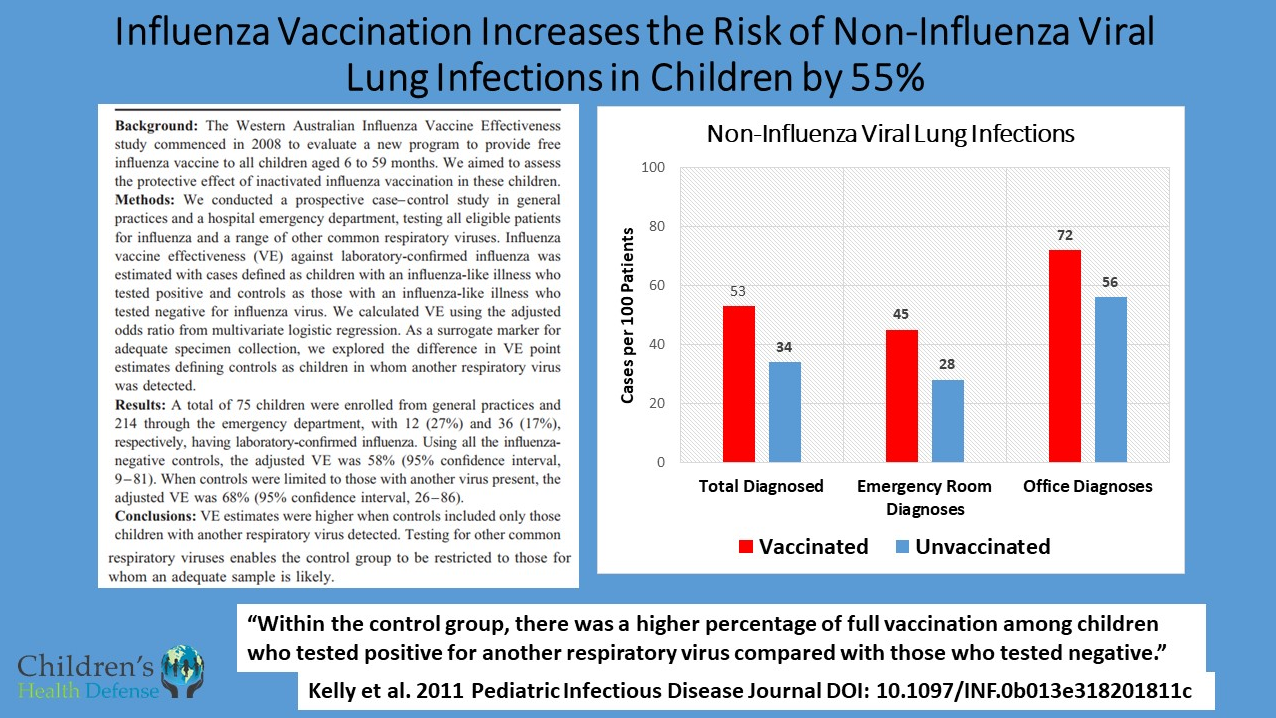
An increase in non-influenza viral lung infections after influenza vaccination.
| Study Details |
| Vaccine Effectiveness Against Laboratory-confirmed Influenza in Healthy Young Children |
 |
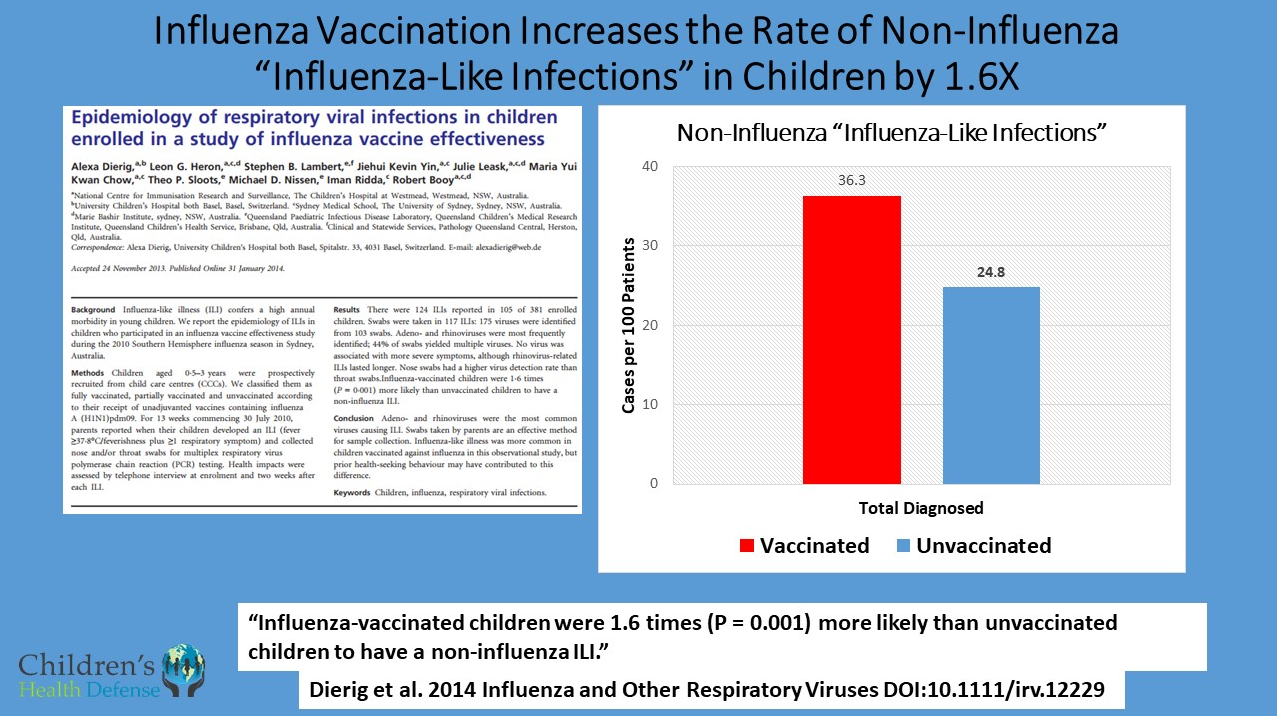
Influenza vaccine producing non-influenza “Influenza-Like Infections”.
(I, for one, would like to see more research into the character of such “Influenza-Like Infections”.)
| Study Details |
| Epidemiology of respiratory viral infections in children enrolled in a study of influenza vaccine effectiveness |
 |
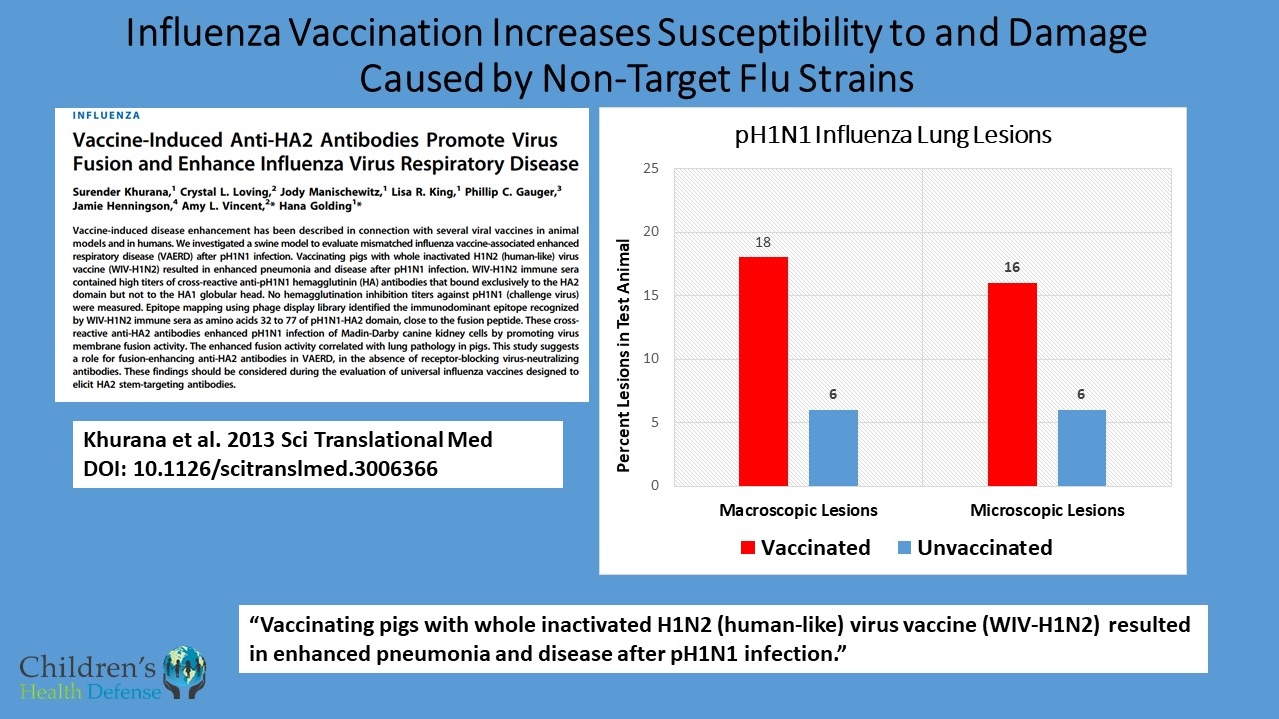
This study examines the phenomenon known as Vaccine-Associated Enhanced Respiratory Disease (VAERD), seen after (in this case) H1N2 influenza vaccination and a subsequent H1N1 infection. This "mismatch" of vaccine and virus exposure resulted in enhanced pneumonia and disease.
| Study Details |
| Vaccine-Induced Anti-HA2 Antibodies Promote Virus Fusion and Enhance Influenza Virus Respiratory Disease |
 |