Gun Buybacks
First off, "buyback" is a total misnomer, since these guns never belonged to the government in the first place.
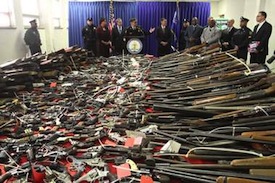 |
| After the Sandy Hook shooting, Camden residents
turned in over 1,000 firearms to the government. |
My opinion: The term is used to subliminally implant the notion that the government is just lending them to you, and that it is doing you a favor to give you cash to get them back.
Buybacks are a way to tap into the herd mentality after a traumatic event. People who feel otherwise helpless join together to make a statement, to make sure their guns are never used for such atrocities. After the Sandy Hook shooting, people from various areas around the country turned in their guns.
If you do a search on the internet for "Gun Buyback", you'll find a huge number of stories that report on the enormous success of these programs. Unfortunately, "success" means that they collected a large number of guns—not that they improved anything related to crime.
In fact, a local television news station reported that during the months following Oakland's 2008 very successful buyback program gun-related crimes increased significantly. [Note: The video of this newscast has been removed as of February, 2018.]
These programs often merely have the effect of taking rusty old firearms off the street, with people using that cash to buy shiny new ones. The Independent Institute reports that the first two people in line at one of Oakland buyback locations were "gun dealers with 60 firearms packed in the trunk of their cars." No questions asked.
It's difficult to find real studies that correlate crime rates to gun buybacks, but those that do tend to show either no effect or an increase in crime, such as the one described above. For a good explanation of the reasons and other examples, see: Oakland's Gun Buyback Misfires.
